The Labubu Theory of AI Adoption: Why Your Assistant Came Back as a Toy
Meta's Muse and OpenAI's Dots aren't cute by accident. Like Labubus and Pokémon cards, they're a Trojan horse for people who never planned to use AI.

Remember the Humane AI Pin? It launched, it didn't work, and in early 2025 the company turned off the servers and the whole thing died. Rabbit's R1 didn't die as loudly. It just ended up in the same drawer as the Vision Pro nobody bought.
The lesson everyone took home was simple: nobody wants a dedicated AI gadget. The phone won. Case closed.
Eighteen months later, Meta is selling Muse with collectible charms, a LISA edition of the Ray-Bans, and a pocket device for people who don't want to wear glasses or stare at their phone. OpenAI launched Dots, little geometric creatures you customize with a color and a name, each one running on its own computer in the cloud. The dedicated AI object is back. It just stopped pretending to be useful first.
That's the real shift. Humane and Rabbit sold utility. The pitch was "this does what your phone does, but better and without a screen." That's a functional argument, and functional arguments are easy to lose. One slow answer at a dinner table and the product has failed on its own terms. There's no second reason to keep it around. Nobody has ever said "sure, it doesn't work, but I just like having it on my shirt."
Muse and Dots aren't making a functional argument. They're making an argument about wanting to own something.
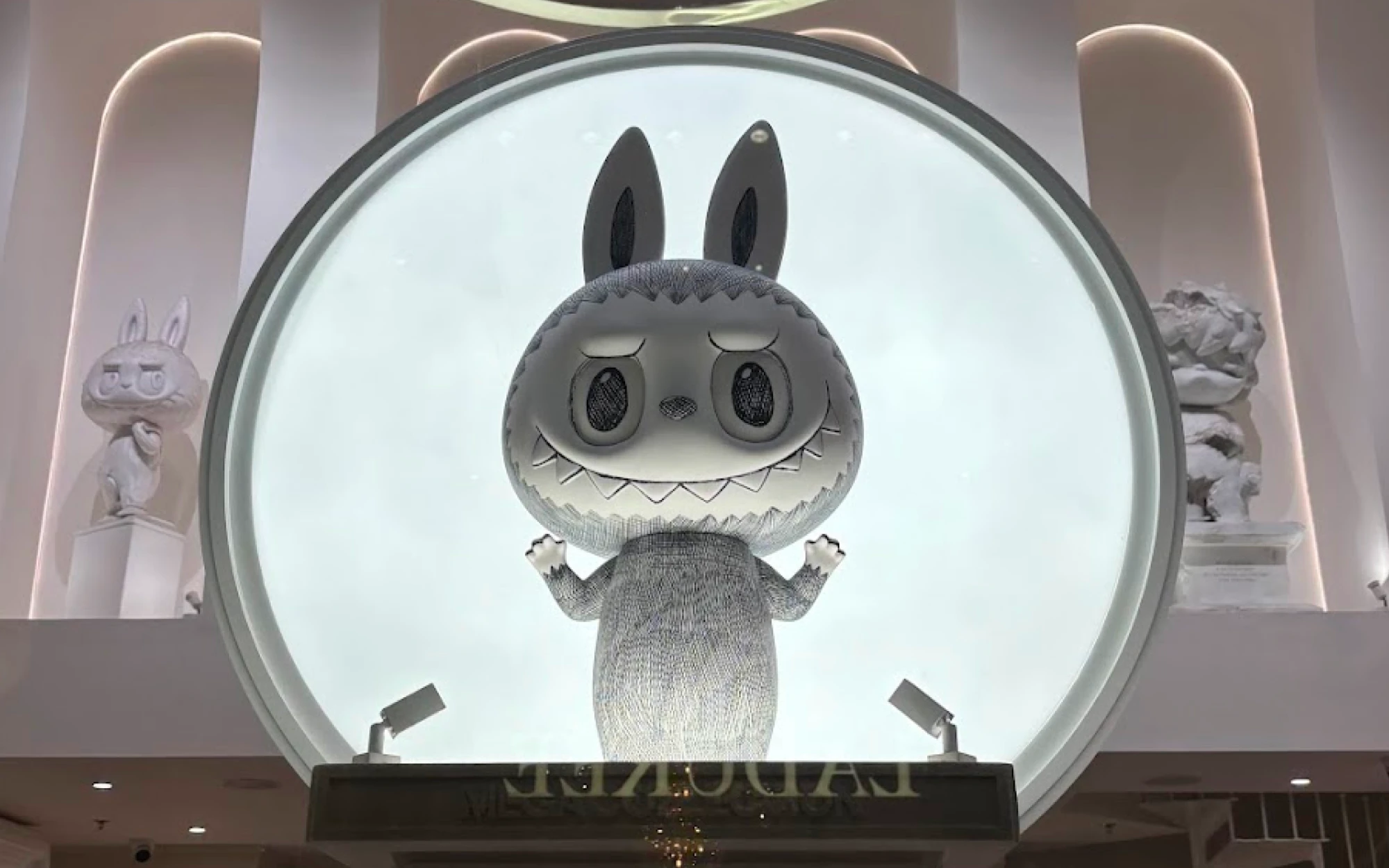
While AI hardware was being buried, the collectibles economy was having the best years of its life. Pop Mart sold more than 100 million Labubus in 2025 and passed $5 billion in revenue, mostly by selling blind boxes where you don't know what you're getting. People paid for the surprise. Pokémon cards are still everywhere, and a first edition Charizard still costs more than a used car. The same market that rejected a $700 AI pin happily lined up overnight for a small furry monster with teeth.
Meta noticed. A BLACKPINK collaboration with collectible charms isn't an accessories decision. It's a distribution decision. It reaches a buyer who would never buy a productivity device and would absolutely buy something LISA wears. The AI shows up inside the thing they already wanted.
This is where the adoption curve matters. Most coverage calls these avatars "onboarding for mainstream users": friendlier than a blank text box, easier to start. True, but too small. Onboarding assumes people already decided to adopt. The people these launches are aimed at haven't decided anything. They're the late majority and the laggards, and laggards don't adopt technology because it got easier. They adopt it because it came inside something else they already wanted.
Cute isn't a UX choice here. Cute is the Trojan horse.
There's a second reason this works, and it's retention. A tool has to earn its place every day. The day it isn't useful, you stop opening it. A character plays by different rules. When your Tamagotchi was being difficult, you didn't think it was broken, you thought it had a personality. Customization makes it stickier. Pick the voice, pick the clothes, pick the color, and now you've invested something. Humane gave you a device. Meta and OpenAI are giving you something with a name, and it's much harder to put something with a name in a drawer.
Now the less fun part.
These agents run on their own cloud computers, connect to more than 4,000 apps, and keep working while you sleep. When one of them books the wrong flight at 3 a.m., the friendly shape is standing between you and the mistake. It's hard to be furious at something that looks huggable. Both companies seem to know this, which is why the soft exterior ships with read-only modes, approval rules, and enterprise controls. The toy is the front end. The permissions system is the actual product. The gap between how those two feel is where users will eventually get hurt.
And no, the Humane failure hasn't been reversed. It's been routed around. Humane's real mistake wasn't hardware. It was asking people to change their behavior for a payoff that never came. Meta and OpenAI aren't asking anyone to change anything. Glasses are still glasses. A charm is still a charm. The avatar lives inside apps you already open. If the AI disappoints, the object still has a reason to exist. A failed AI Pin is a dead pin. Failed Ray-Bans are still sunglasses.
So what does this mean for those of us who design products?
For the last part of the adoption curve, the question isn't "how do we make this easier to use" anymore. It's "what does this person already want that we can put this inside." The retention question isn't "how do we add value every day," it's "what gives this a reason to stay on a bad day." And the honest question, the one worth saying out loud in a design review: is the warmth we're designing helping people understand the system, or helping the company avoid their anger?
Humane sold a device that did things, and nobody kept it. Pop Mart sold a creature that does absolutely nothing, and sold a hundred million of them. The AI industry looked at both results and picked the creature.
Co-written by Jay López L. and Claude. Find Jay on Instagram: @jay.human_

Jay López · Co-founder & Design Director
Colombian product designer from Bogotá, based in Mexico City. Twelve-plus years shipping digital products across Latin America and the US. Jay joined 23 Design in its first year and stayed through the frog chapter. He's the crafter on the team, the one who obsesses over the surface and the polish, the details that make a product feel considered. Among the work he's proudest of: leading the redesign that lets a new Bitso user buy their first Bitcoin in four taps.